
Architecture
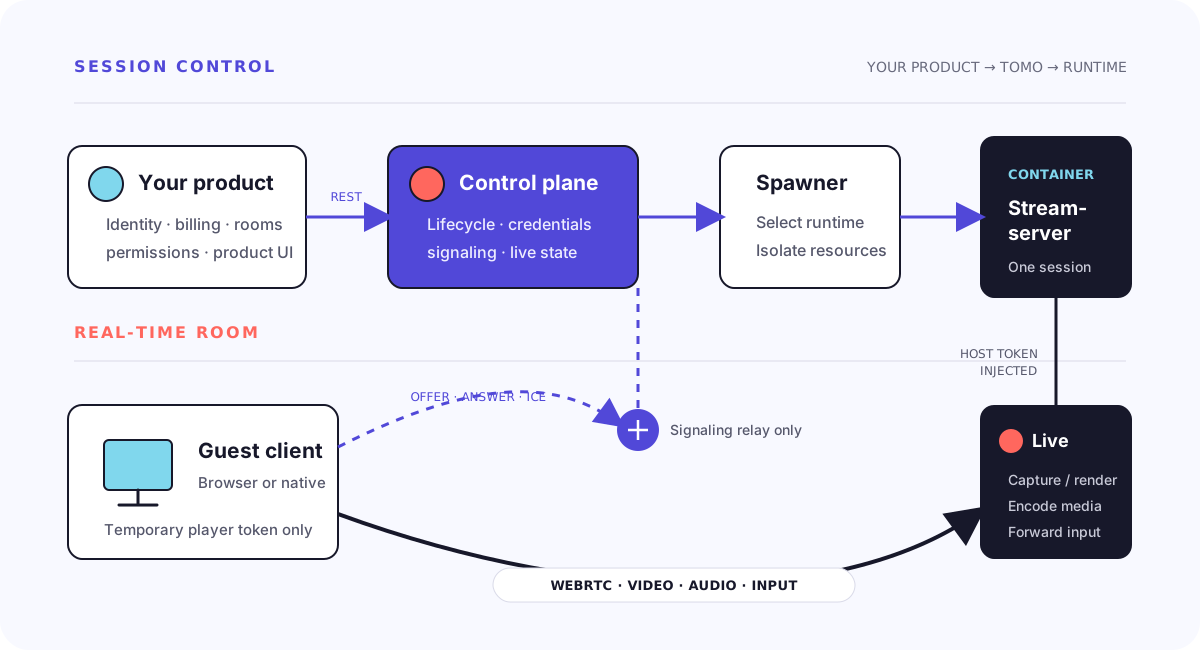
The control plane owns lifecycle and signaling. Media and input connect the guest to the isolated runtime.
Control plane
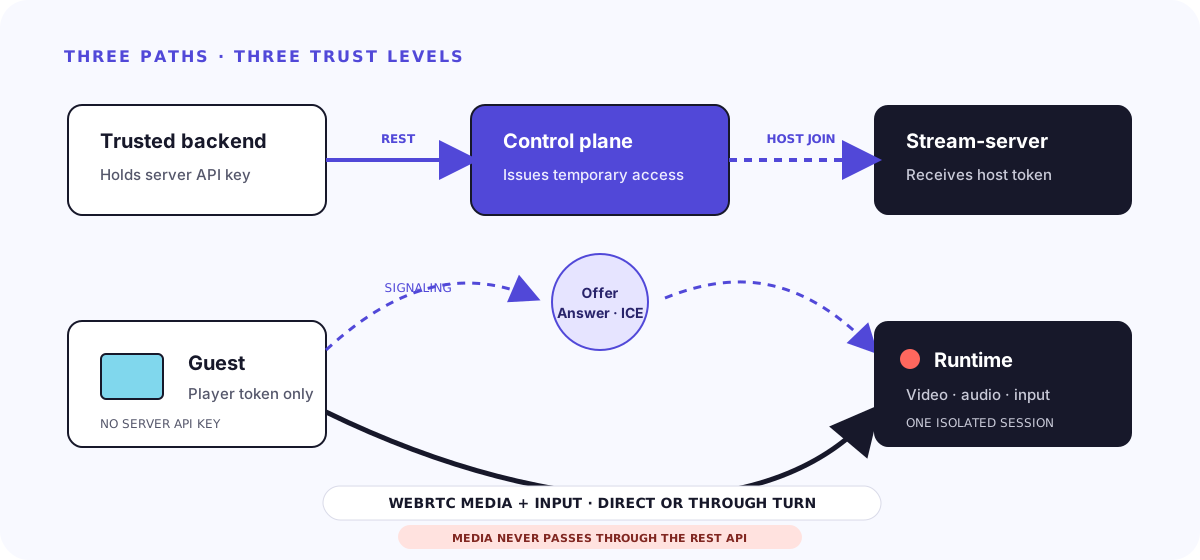
Section titled “Control plane”The control plane authenticates server-to-server API requests, creates session credentials, selects a registered spawner and reconciles the runtime lifecycle. It also relays WebRTC offer, answer and ICE messages.
Stream-server
Section titled “Stream-server”A stream-server is an isolated runtime for one live session. It captures or renders a source, publishes video and audio, and accepts opaque input packets. Camera, desktop and emulator runtimes inherit the same lifecycle contract.
Client
Section titled “Client”The client receives only a temporary connection object. It joins signaling as a player and exchanges media directly with the runtime or through TURN. REST does not proxy the media path.
Extension point
Section titled “Extension point”Source types are open strings. Registering a new spawner and providing a compatible runtime adds a new experience without changing the SDK’s core types.